Marine Electrical Engineering & Integrated Vessel Systems Modernisation
Legacy restoration. Modern navigation. Integrated onboard systems. Long-term support.
Client Environment
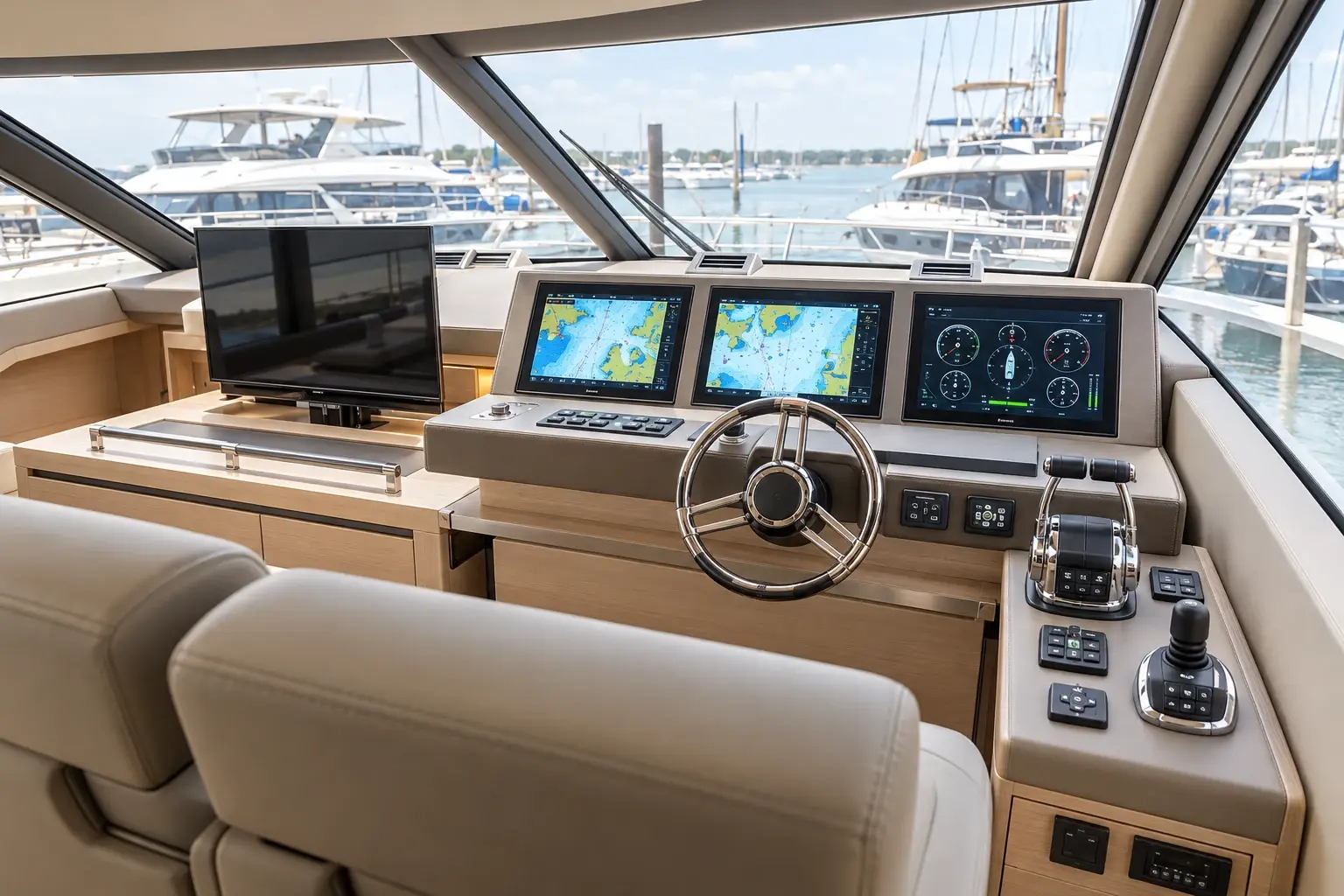
The engagement involved the extensive reconstruction and modernization of a private motor yacht that was more than 30 years old at the time. The vessel, 36 meters long, was taken out of the water for major renovation works, including a three-meter midship extension, construction of a new aluminum bridge cabin, and refurbishment of existing cabins and interior spaces.
The project required the electrical and electronic systems to be restored, adapted to the modified vessel, and coordinated with ongoing mechanical, structural, fabrication and interior-finishing works.
The assignment was entrusted to the technical lead following earlier demonstrations of technical capability across residential and commercial environments.
Requirement
The immediate requirement was to restore reliable operation of the vessel's electrical and electronic systems while preparing it for a substantial navigation and onboard technology upgrade.
Key requirements included:
- Diagnose engine and generator starting failures had previously been attributed to battery problems.
- Assess and rectify unsuitable cabling, connections and associated electrical deficiencies.
- Restore and organize the vessel's AC and DC electrical distribution.
- Integrate lighting, bilge pumping, alarms, ventilation and auxiliary electrical systems.
- Retain and restore usable legacy navigation equipment before the planned modernization.
- Install and integrate modern navigation, communications, security and entertainment systems.
- Produce circuit diagrams and operating procedures to support handover and ongoing maintenance.
Solution Architecture
The approach treated the vessel as an interconnected operating environment rather than a collection of independent devices.
VESSEL ELECTRICAL FOUNDATION
24V DC • 12V DC • 240V AC • Distribution • Circuit Protection
Propulsion & Power
Engine starting, generators, cabling and control interfaces
Navigation
GPS, radar, depth sounding, instruments and autopilot
Communications & Security
VHF, satellite communications, intrusion alarm and CCTV
Auxiliary Systems
Bilge pumps, alarms, ventilation, heating and monitoring
INTEGRATED VESSEL OPERATIONS
Testing • Functional coordination • Operating procedures • Maintenance
The architecture combined restored legacy systems with newer equipment, while retaining the distinction between electrical engineering work and specialist mechanical or other subcontracted disciplines.
Engineering & Delivery
The work progressed in phases alongside the vessel's structural and interior reconstruction.
Electrical Fault Diagnosis And Restoration
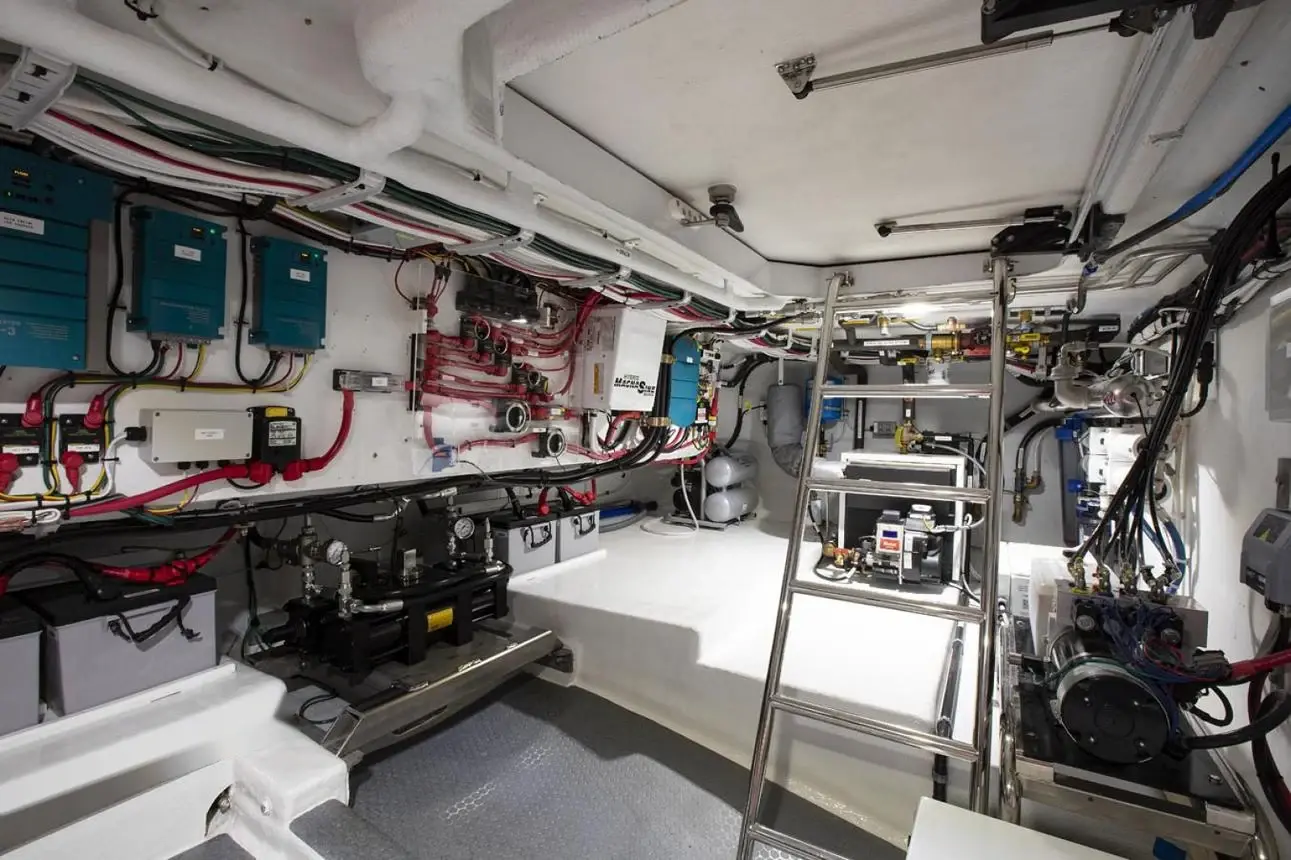
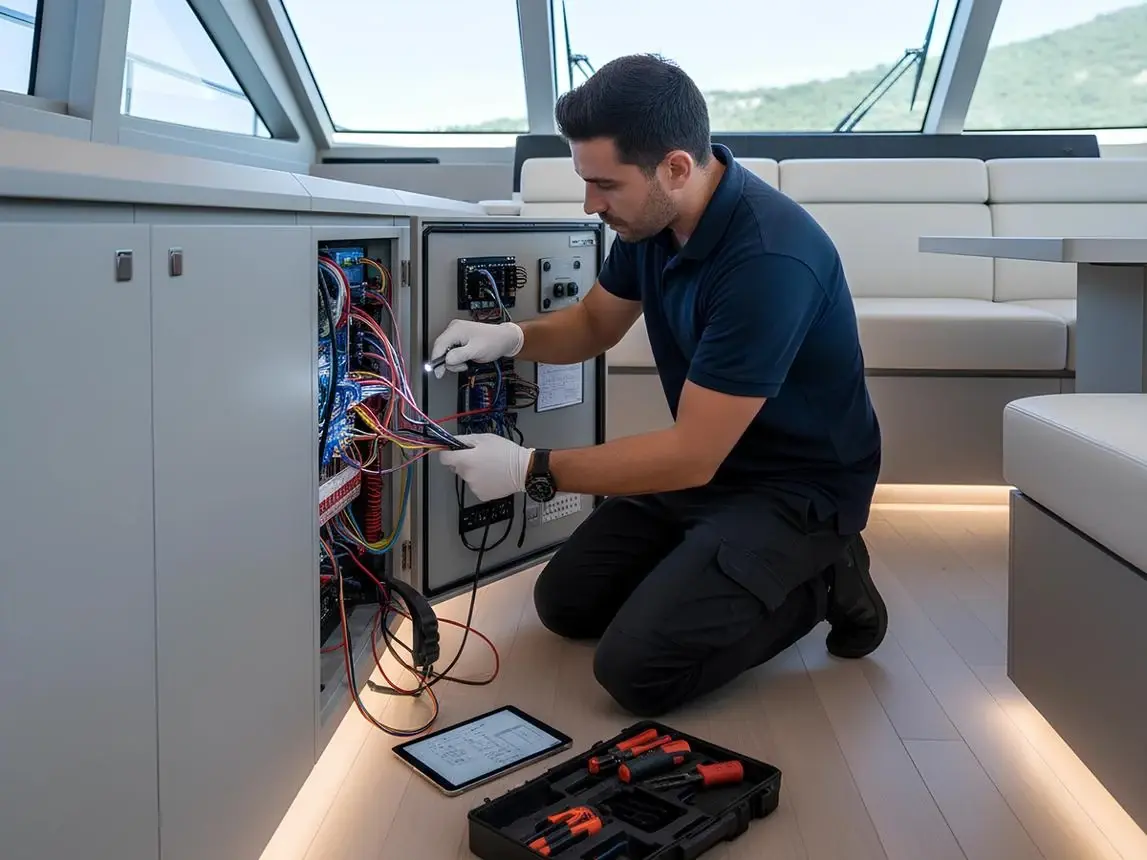
The initial investigation identified unsuitable cable sizing and quality, together with connection deficiencies, affecting the engine and generator starting circuits. The affected cabling was replaced, and associated electrical connections were corrected. The relevant starting systems subsequently operated.
The work also covered AC and DC distribution, circuit protection, contactors and connectors, bilge-pump cabling, cable routing and the selection of suitable electrical accessories.
Navigation And Onboard Electronics
Legacy navigation equipment was restored where appropriate before a later Raymarine upgrade introduced modern multifunction displays and supporting navigation components.
The upgrade included equipment for radar, GPS/chart navigation, depth and wind data, heading information and autopilot operation. Integration involved the transition between SeaTalk and SeaTalkng interfaces, associated cabling, network components and supporting connections.
Autopilot operation was tested during deep-sea trials, including recorded navigation patterns.
Communications, Security And Monitoring
The scope included the reinstallation of an Icom VHF radio with a replacement antenna, a Sailor 150 Fleet Broadband satellite communications terminal and associated handset equipment.
The security scope included a RISCO ProSys intrusion alarm and marine-grade CCTV cameras connected to a Vista Smartmobile DVR.
Auxiliary Systems And Onboard Services
Electrical work extended to bilge pumps and their controls, float switches, alarms and indicators, ventilation fans, fuel-level warning functions, heating and selected air-conditioning electrical controls.
The electrical portion of the air-conditioning compressor work included starter controls, overload protection, pressure and phase-failure protection, and a timer. Specialist compressor setup and piping were handled separately.
Lighting was selected for the vessel's different spaces, including cabins, the engine room, navigation areas and the newly constructed bridge. Electrical diagrams and operating procedures were prepared for handover.
Assurance
Assurance focused on confirming that repaired and installed systems operated as intended and could be understood and maintained after handover.
The documented work included:
- Functional testing following electrical fault rectification.
- Checks of relevant starting circuits, distribution and protective components.
- Testing of bilge pumps, alarms and selected auxiliary functions.
- Verification of navigation equipment interfaces and autopilot operation during sea trials.
- Service testing of satellite communications equipment following installation and activation.
- Preparation of circuit diagrams and operating procedures.
These activities demonstrate a practical approach to diagnosis, integration, functional verification and handover. They should not be interpreted as evidence of a formal independent marine certification or classification survey unless supporting records are available.
Outcome
The reported outcomes included restored operation of the affected engine and generator starting circuits, modernized navigation capability, integrated onboard communications and security systems, and improved electrical documentation.
The vessel returned to service following the wider reconstruction and systems work.
A further indication of the value of the original work came when a subsequent owner contacted the engineer for maintenance and replacement support more than a decade later. Notes from an August 2024 service call reported that original cabling remained functional; this is a recorded observation, not an independent assessment of the condition of all vessel wiring.
The case demonstrates how careful fault diagnosis, appropriate component selection, phased engineering and system-level coordination can contribute to the long-term usability of a complex technical environment.
Lifecycle
The engagement extended beyond the initial reconstruction. Subsequent contact for servicing and maintenance demonstrated the value of retaining familiarity with the vessel's systems and their original installation.
Later recorded work included a chart update and replacement of a multifunction-display screen.
The lifecycle principles illustrated by this engagement align with Aegis's wider approach:
- Support
Provide practical technical assistance when required.
- Maintain
Diagnose faults and address component or system deterioration.
- Modernise
Introduce new technology while considering existing infrastructure.
- Document
Preserve circuit information and operating procedures.
- Evolve
Adapt the environment as operational requirements and technologies change.
The Engineering Significance
This experience is relevant to Aegis because it demonstrates several principles that also apply to corporate, industrial and critical infrastructure projects:
- Diagnose underlying infrastructure faults before replacing equipment.
- Design around the complete operating environment, not isolated components.
- Integrate new technology with legacy systems where technically appropriate.
- Coordinate engineering delivery with other disciplines and project activities.
- Validate operation and provide documentation for ongoing support.
The marine project is presented as prior professional leadership experience. It is evidence of the engineering experience behind Aegis, not an Aegis-contracted project.